Plenary Speakers

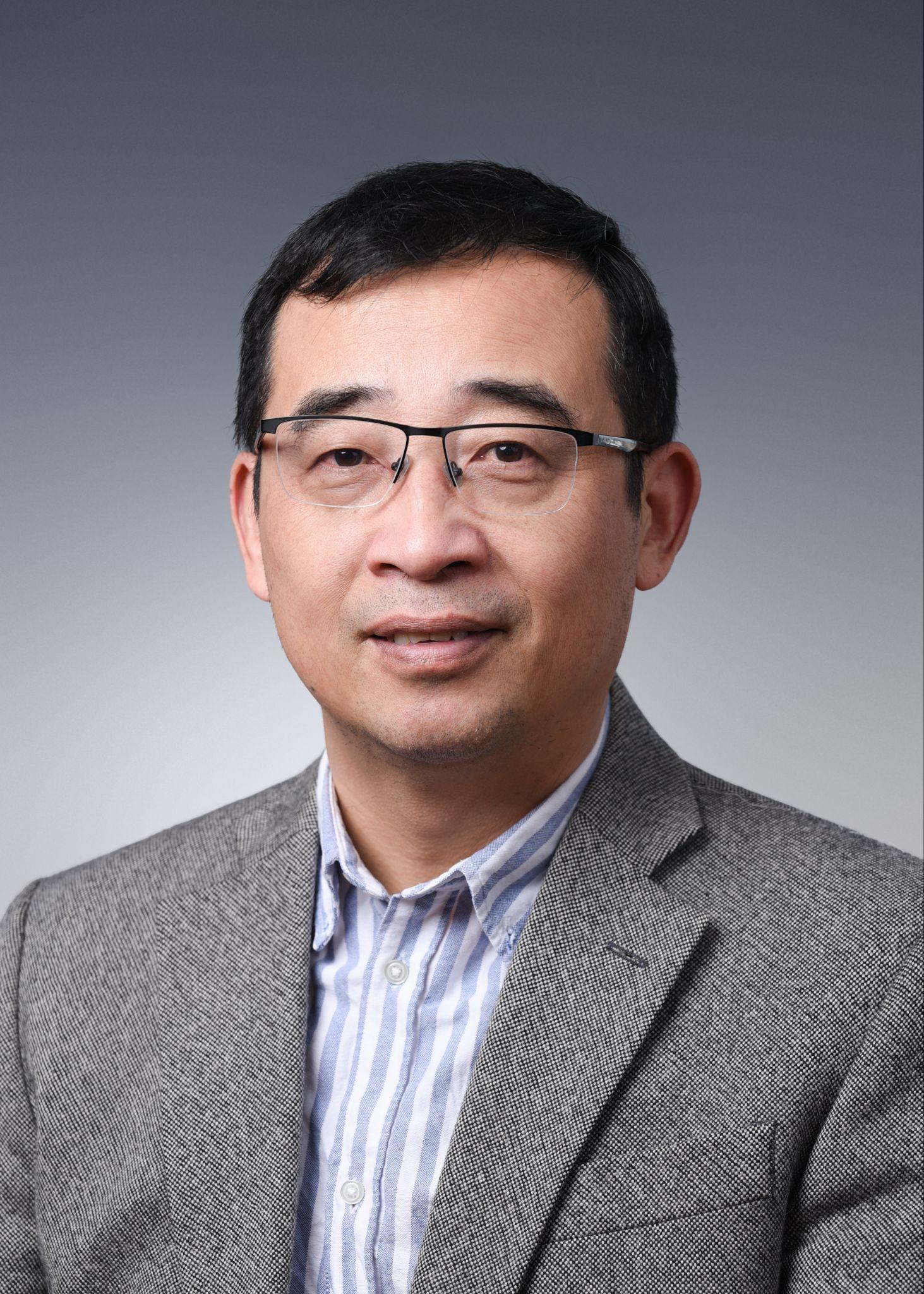
Portrait of Shi Jin
Plenary Lecture 1

Shi Jin

Shanghai Jiaotong University

Talk

Quantum Computations of nonlinear PDEs and the UnitaryLab Software

Date
Monday, August 24
Time
08:30–09:20
Room
H
Chair
Tao Tang
Abstract & Biography

Abstract

Quantum computers are designed based on quantum mechanics principle, they are most suitable to solve the Schrodinger equation, and linear PDEs (and ODEs) evolved by unitary operators. Nonlinearity and Nonunitarity are the main challenges for quantum simulations of PDEs.

For linear PDEs (and ODEs) Schroginerization provides a general method to unitarize them for quantum simulation. For nonlinear problems we first introduce our quantum algorithms for (nonlinear) Hamiton-Jacobi equations, for both multi-valued solutions and viscosity solutions that are needed beyond the formation of caustics. We also introduce quantum algorithms for Young measures associated with nonlinear PDEs, which are effective tools to compute weak solutions to nonlinear PDEs that have singular solutions such as shocks, caustics, physical instabilities or (random) uncertainties.

We also introduce “UnitaryLab”, which is an AI-powered research software package of quantum algorithms for scientific computing.

Biography

Shi Jin is the Director of Institute of Natural Sciences, and Chair Professor of Mathematics, at Shanghai Jiao Tong University. He also serves as a director of Ministry of Education Key Lab on Scientific and Engineering Computing, and director of Shanghai Jiao Tong University Chongqing Artificial Intelligence Institute.

He received a Feng Kang Prize of Scientific Computing in 2001, a Morningside Silver Medal in 2007, a Shanghai Natural Science Prize (first class) in 2024, a “Frontier of Science“ award in International Congress of Basic Sciences in 2025, and a Shanghai Jiao Tong University Ruiyuan Science and Technology Grand Prize in 2026. He is an inaugural Fellow of the American Mathematical Society (AMS) (2012), a Fellow of Society of Industrial and Applied Mathematics (SIAM) (2013), an inaugural Fellow of the Chinese Society of Industrial and Applied Mathematics (CSIAM) (2020), an Invited Speaker at the International Congress of Mathematicians in 2018 and at the International Congress of Industry and Applied Mathematics in 2027. In 2021 he was elected a Foreign Member of Academia Europaea and a Fellow of European Academy of Sciences.

His research interests include kinetic theory, hyperbolic conservation laws, quantum dynamics, uncertainty quantification, interacting particle systems, computational fluid dynamics, machine learning and quantum computing, etc. He has published over 250 papers in Acta Numerica, Comm. Pure Appl. Math., PNAS, Phys. Rev. Lett., etc.
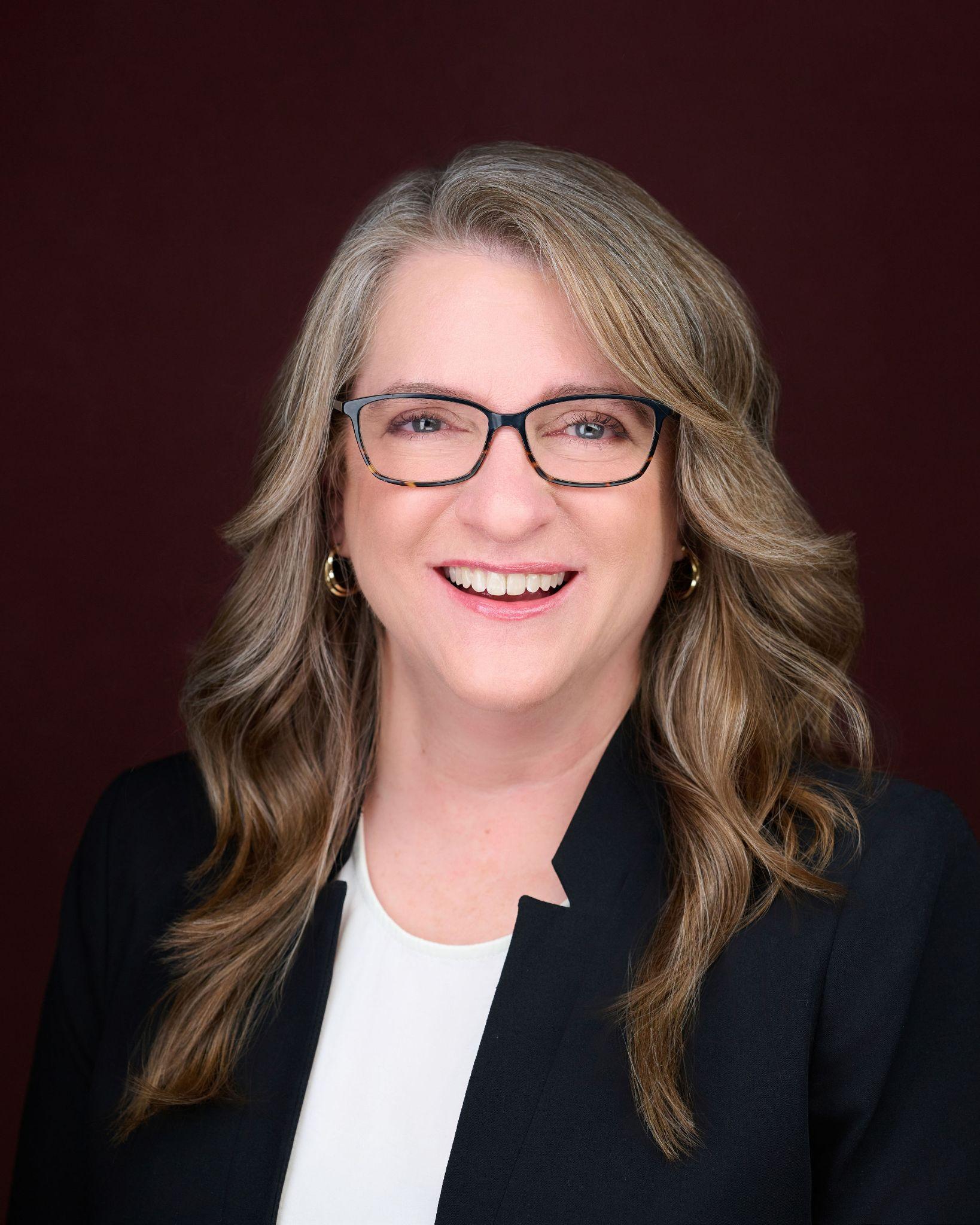
Portrait of Carol S. Woodward
Plenary Lecture 2

Carol S. Woodward

Lawrence Livermore National Laboratory

Talk

Adaptive Time Integration Methods, Software, and Applications

Date
Tuesday, August 25
Time
08:30–09:20
Room
H
Chair
Ming-Chih Lai
Abstract & Biography

Abstract

Adaptive time integration has become an essential tool for the efficient and accurate simulation of time-dependent science and engineering applications. In this presentation, we examine the value of adaptive stepping strategies for controlling error and reducing computational cost. We then develop the formulation of both fixed step and newly developed adaptive multirate methods, emphasizing how these multirate approaches exploit disparate temporal scales to achieve greater efficiency than standard single-rate schemes. A further focus is on software infrastructure, where robust implementations of adaptive and multirate integrators enable practical deployment in large-scale scientific computing. We highlight how these methods are hardened in reliable software frameworks and discuss their use in applications spanning quantum dynamics, combustion, and nuclear physics. Together, these examples demonstrate the impact of advanced time integration methods on the simulation of complex physical systems and underscore the interplay between numerical analysis, algorithm design, and scientific software development.

Biography

Dr. Carol Woodward is a Distinguished Member of the Technical Staff at Lawrence Livermore National Laboratory and currently serves as President of the Society for Industrial and Applied Mathematics (SIAM). She received her PhD in Computational and Applied Mathematics from Rice University and has been at Lawrence Livermore National Laboratory in the Center for Applied Scientific Computing since then. She is the Director of the Frameworks, Algorithms, and Software Technologies (FASTMath) Institute, a 10-institution effort to provide numerical algorithms expertise and software to scientists across the United States Department of Energy. She also leads the development and deployment of the SUNDIALS package of time integrators and nonlinear solvers which garners over 100,000 downloads/clones each year. Her research interests include numerical methods for nonlinear partial differential equations, nonlinear and linear solvers, time integration methods, numerical software development, and parallel computing. Dr. Woodward was named to the 2017 Class of Fellows of SIAM and to the 2021 Class of Fellows of the Association for Women in Mathematics. In 2023 Dr. Woodward was a co-winner of the ACM/SIAM Prize in Computational Science and Engineering as part of the SUNDIALS Core Development Team.

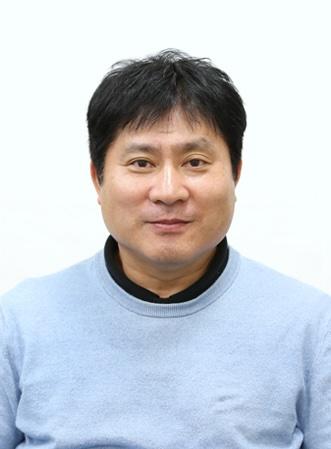
Portrait of Myungjoo Kang
Plenary Lecture 3

Myungjoo Kang

Seoul National University

Talk

Deep Learning-Based Surface Reconstruction from Point Clouds

Date
Wednesday, August 26
Time
08:30–09:20
Room
H
Chair
Hisashi Okamoto
Abstract & Biography

Abstract

In this presentation, we introduce an advanced deep learning approach for reconstructing surfaces from unorganized point clouds. By leveraging an implicit surface representation through a level set function, our method ensures watertight results and seamlessly adapts to various topologies. We employ the p-Poisson equation to precisely learn the signed distance function (SDF), improving accuracy through a variable splitting strategy that incorporates the SDF gradient as an auxiliary variable. Additionally, we enforce a curl-free condition on the auxiliary variable to exploit the irrotational nature of conservative vector fields. Our numerical results illustrate that this strategic integration of partial differential equations and key vector field characteristics efficiently reconstructs high-quality surfaces without the need for prior surface knowledge

Biography

Myungjoo Kang is a Professor in the Department of Mathematical Sciences at Seoul National University (SNU), where he is also affiliated with the Interdisciplinary Programs in Computational Science and Artificial Intelligence. He received his B.S. from Seoul National University, M.S. from KAIST, and Ph.D. in Applied Mathematics from the University of California, Los Angeles (UCLA). His research spans applied mathematics, scientific computing, numerical analysis, and machine learning/deep learning, with a particular focus on optimal transport, physics-informed neural networks (PINNs), and neural operators. A Fellow of the Korean Academy of Science and Technology (KAST), Prof. Kang has published over 150 SCI-indexed papers in premier journals and top-tier AI conferences including ICML, NeurIPS, ICLR, and ICCV. He previously served as Chair of the Department of Mathematical Sciences at SNU and Vice President of KSIAM and EASIAM.